

How to gamify your life (step by step)

Part of the guide: How to Gamify Your Life: The Complete Guide
What does it mean to gamify your life?
In the most cited academic definition, gamification is the use of game design elements in non-game contexts. Gamifying your life means taking your real routine (work, study, home, long-term goals) and giving it the parts you already know from RPGs and MMORPGs: quests, XP, levels, a boss and rewards.
Let's be honest about the limits. A review of empirical studies found that gamification tends to have positive effects, but that they depend heavily on the context and on the people using it. It isn't magic. It is a tool you tune until it fits.
How to gamify your routine, step by step
1. Pick the goal that is your campaign
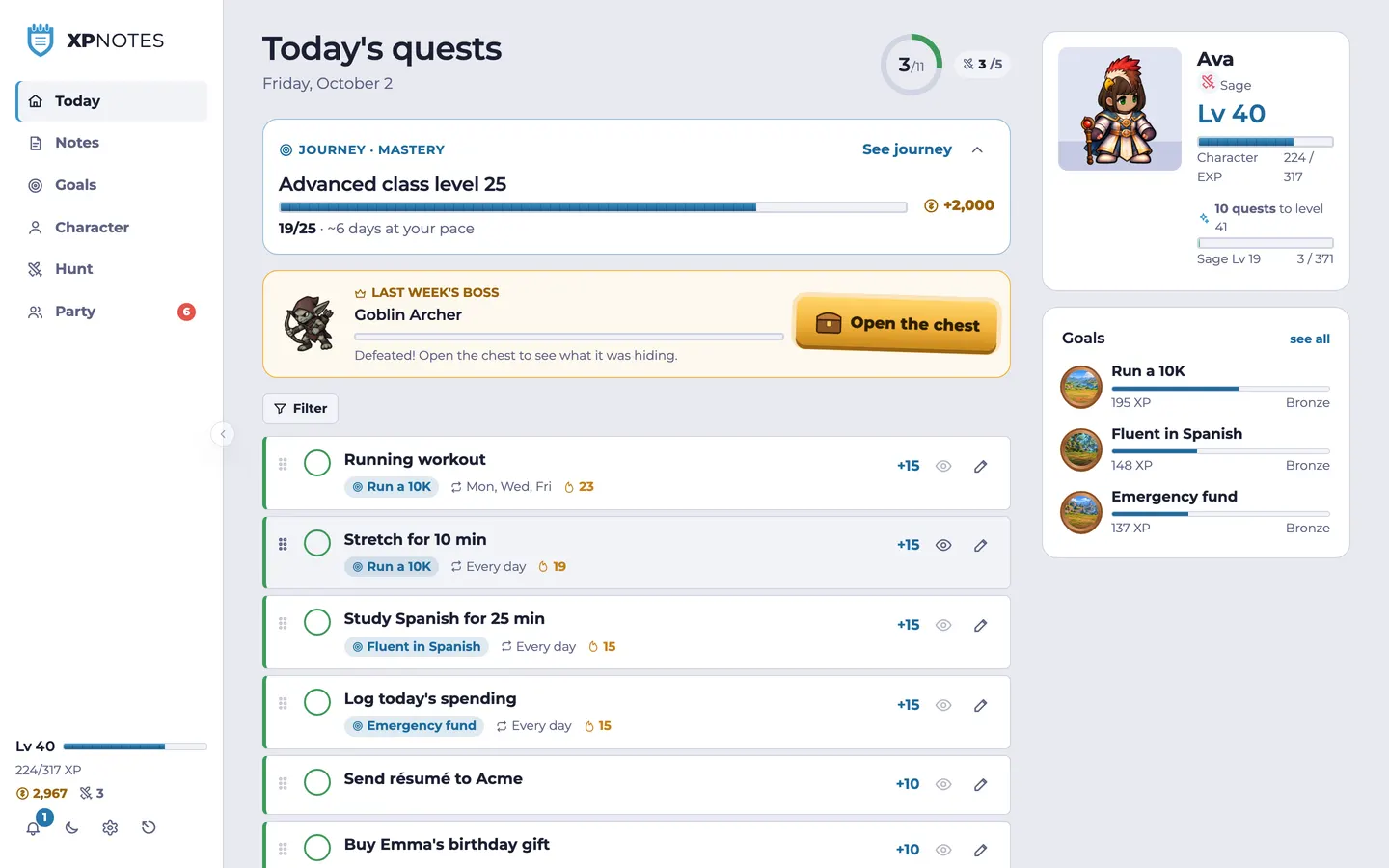
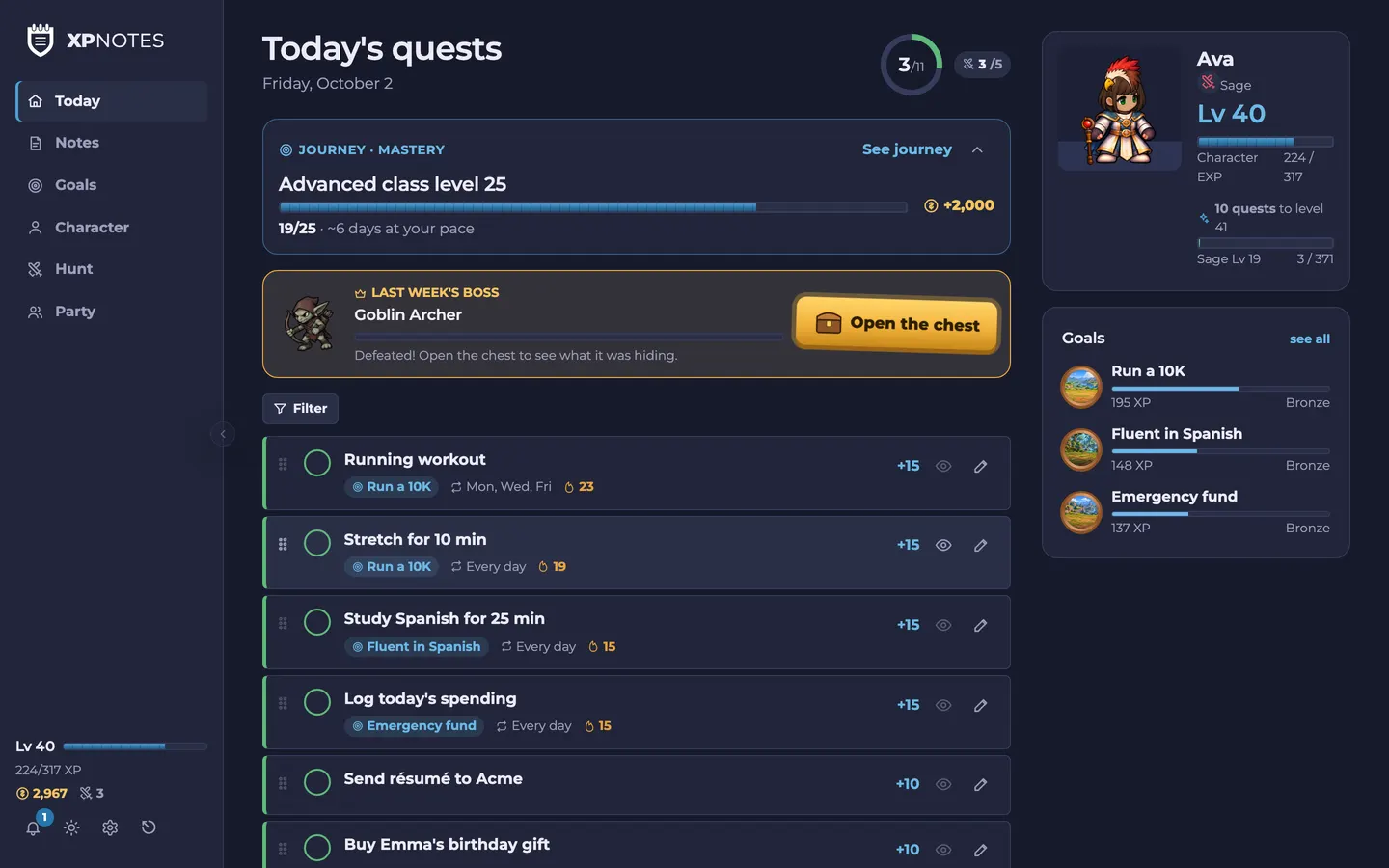
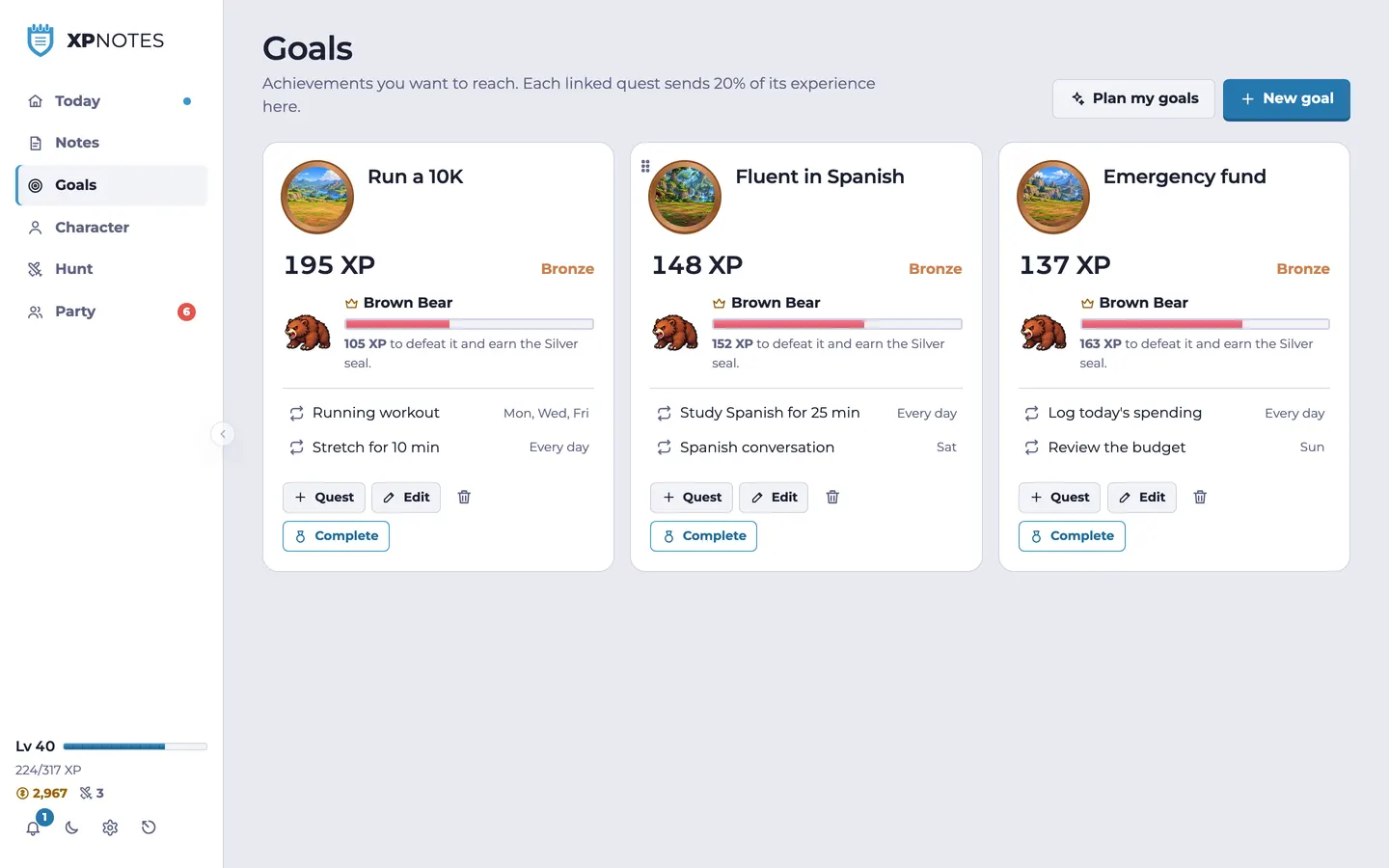
A game with no campaign is just a point counter. Before you create any quest, choose one concrete life goal: pass an exam, change careers, get back to learning a language. In XPNotes the campaign setup screen asks for exactly this: life areas, goals and the habits that become recurring quests.
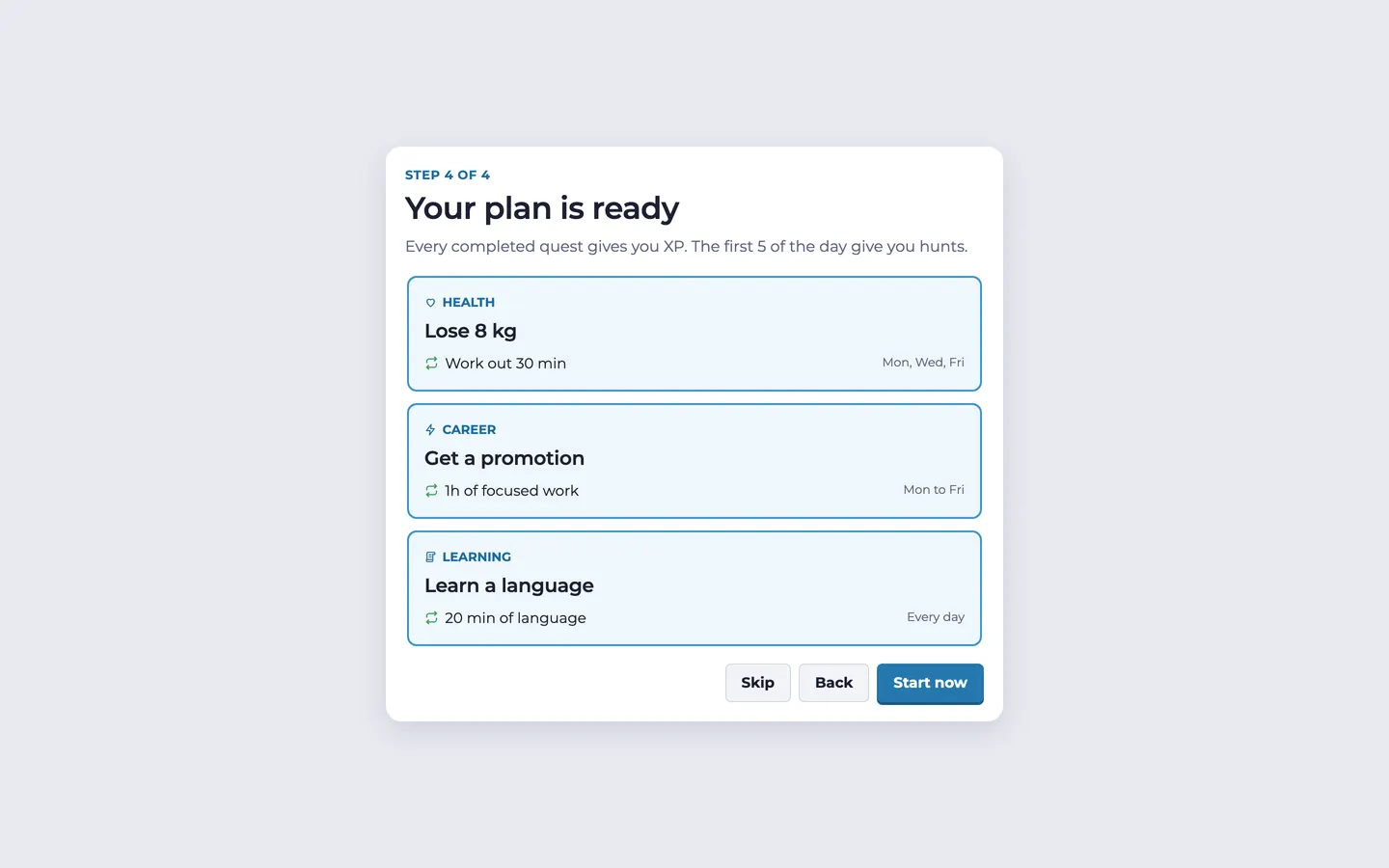
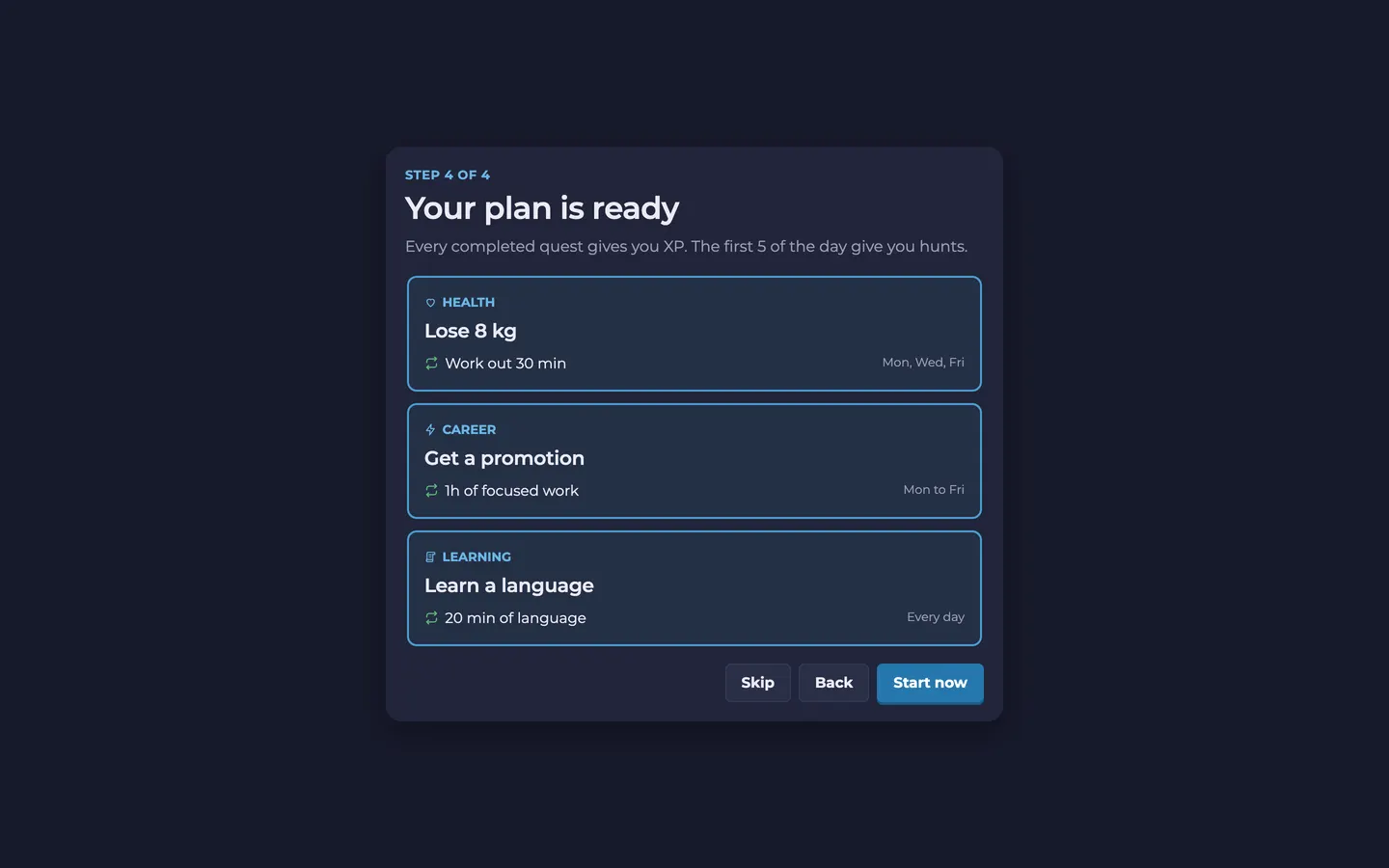
2. Break the goal into small quests
A good quest fits in one day and has a clear finish line: "solve 10 practice questions", "write the first paragraph", "gather the documents". If a quest needs a whole afternoon just to start, split it again.
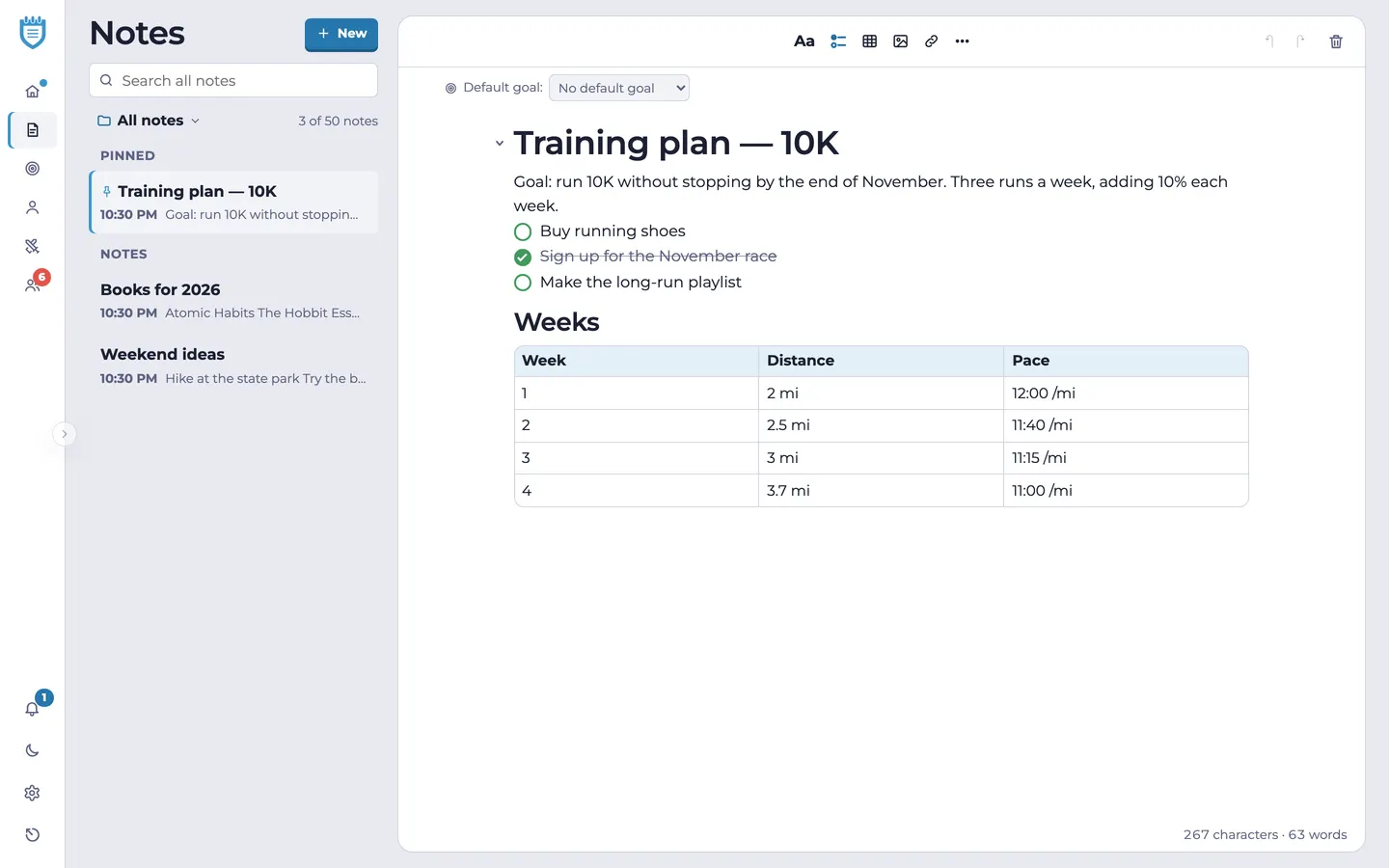
You can also plan in notes. In XPNotes, task lines inside a note become quests and give XP when you complete them, so planning and doing live in the same place. See how it works on the features page.
3. Give every quest XP (and keep the rule simple)
Complicated scoring turns into paperwork. In XPNotes every quest is worth 10 XP, with no difficulty to calculate. Level 1 to 2 takes 20 XP, which is two quests; after that each level asks for a bit more (level 2 to 3 takes 47 XP, for example). Progress is linear with no cap.
If you build the system on paper, do the same: one fixed value per quest and a level bar that rises predictably.
4. Celebrate right away
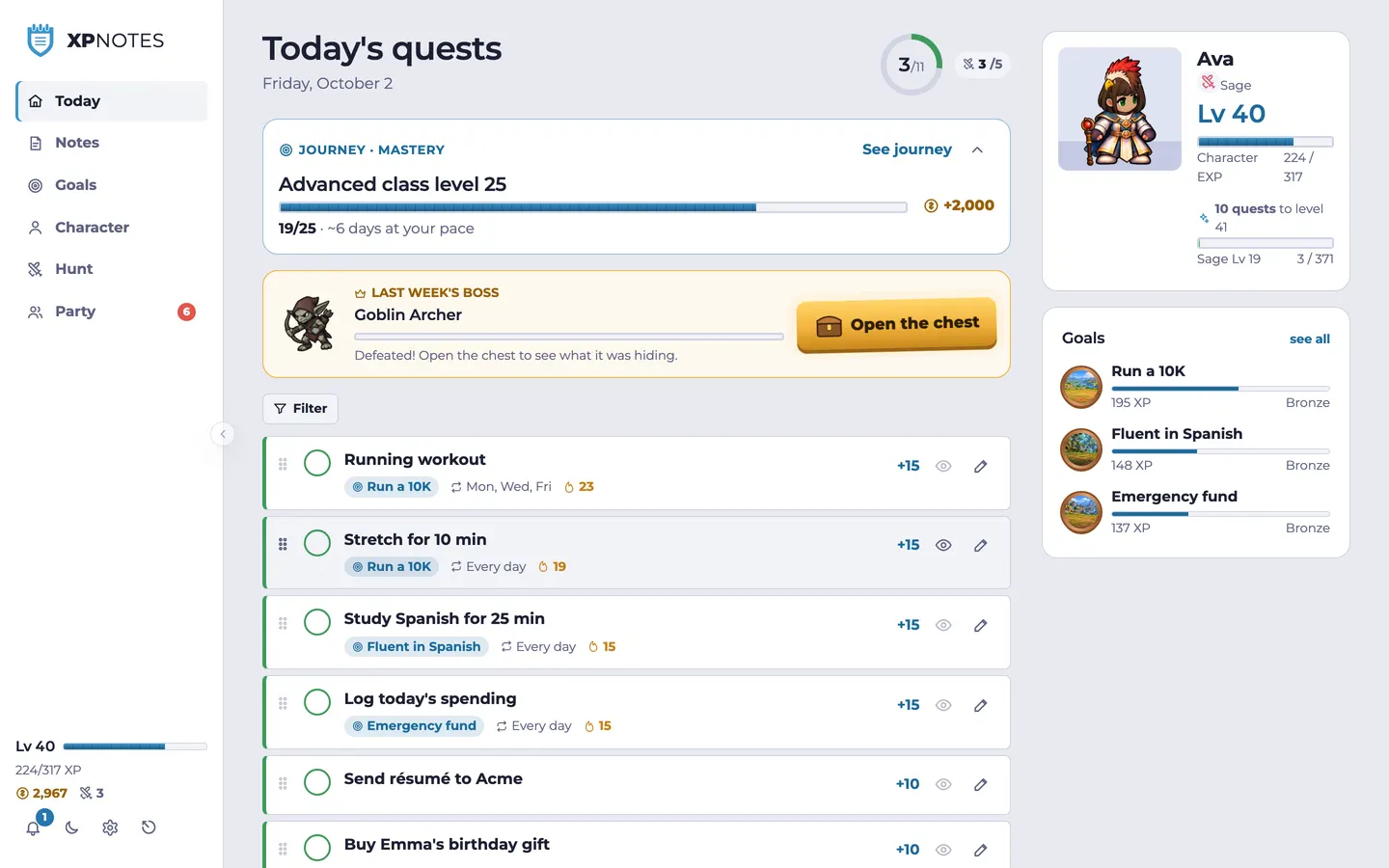
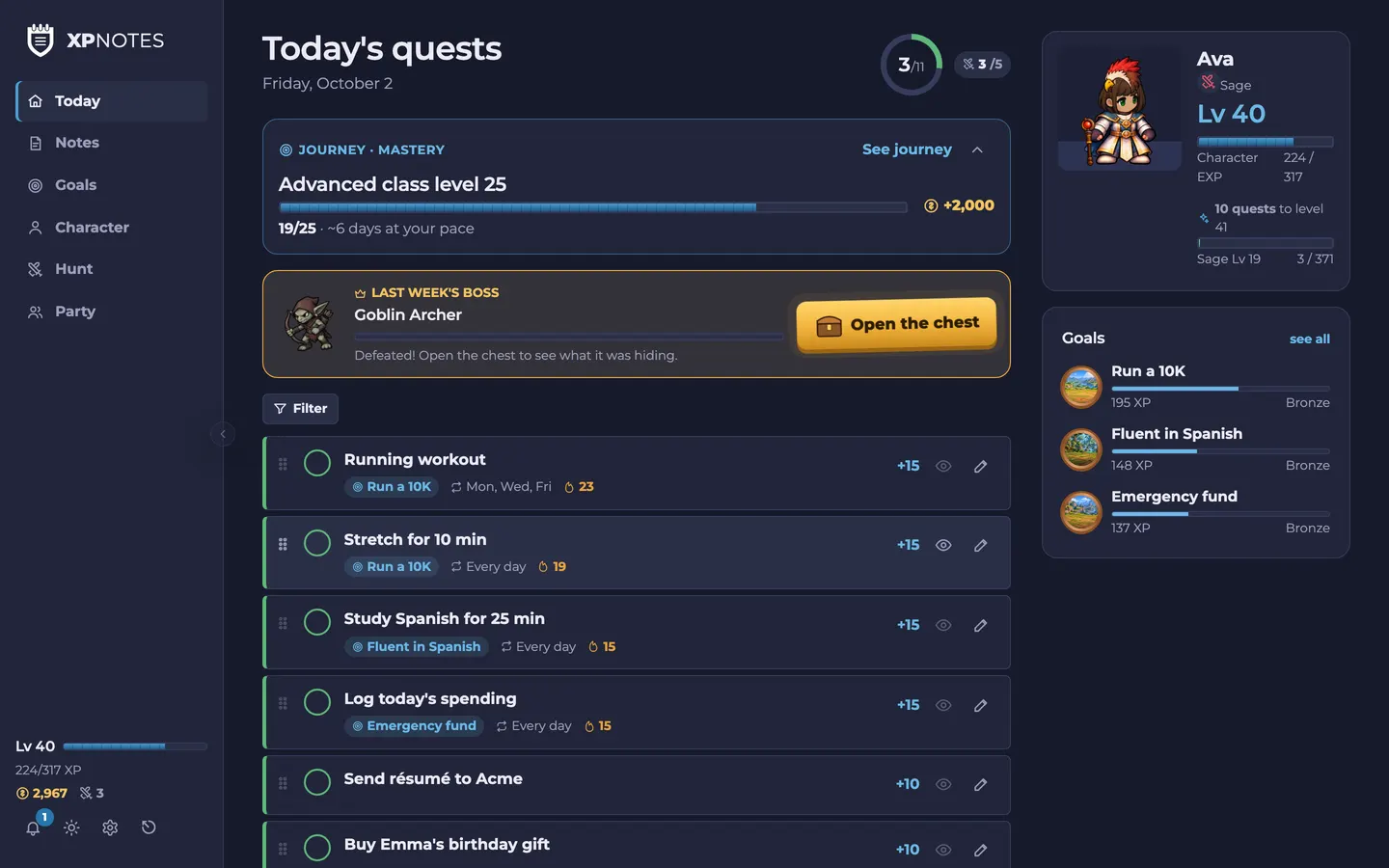
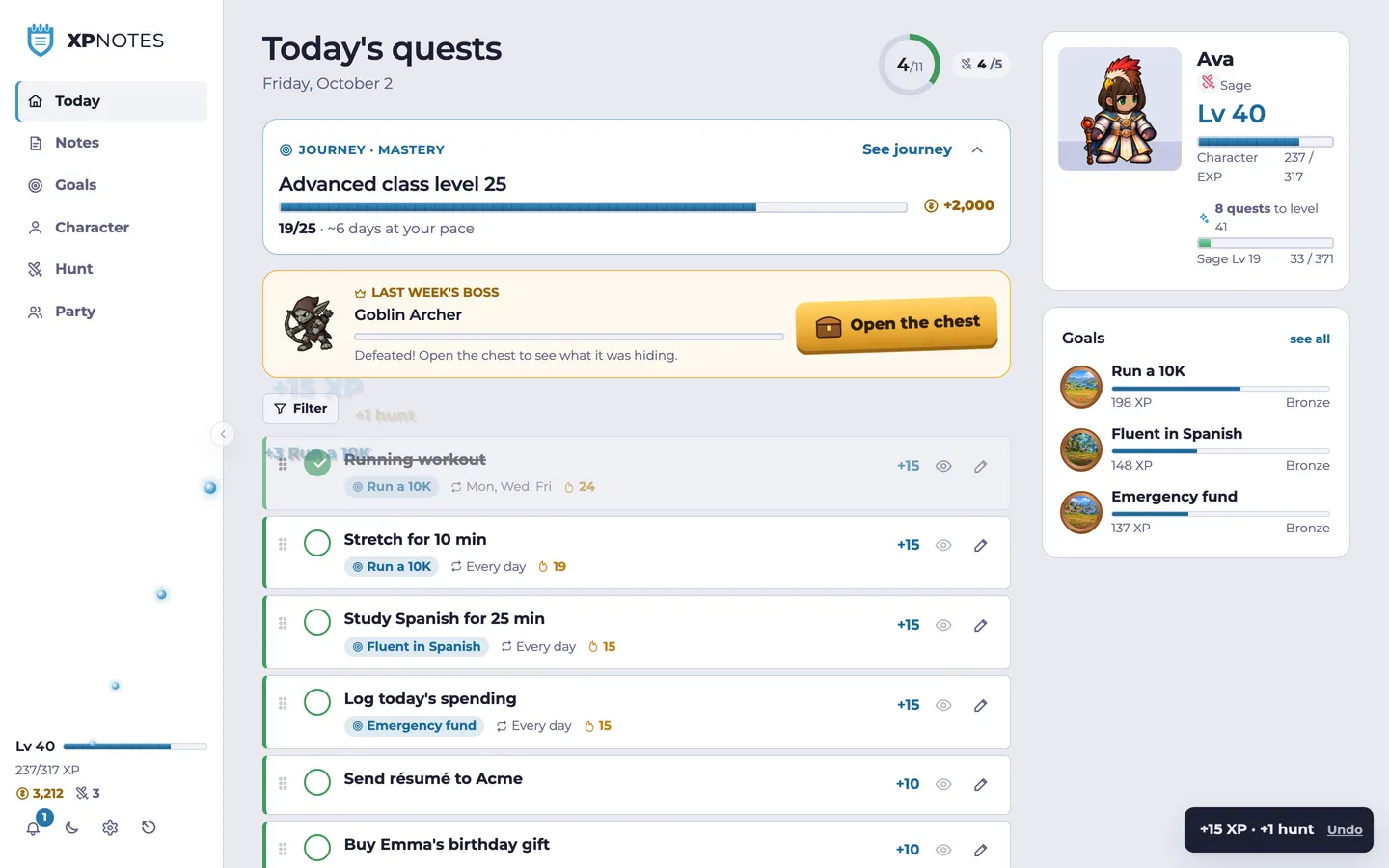
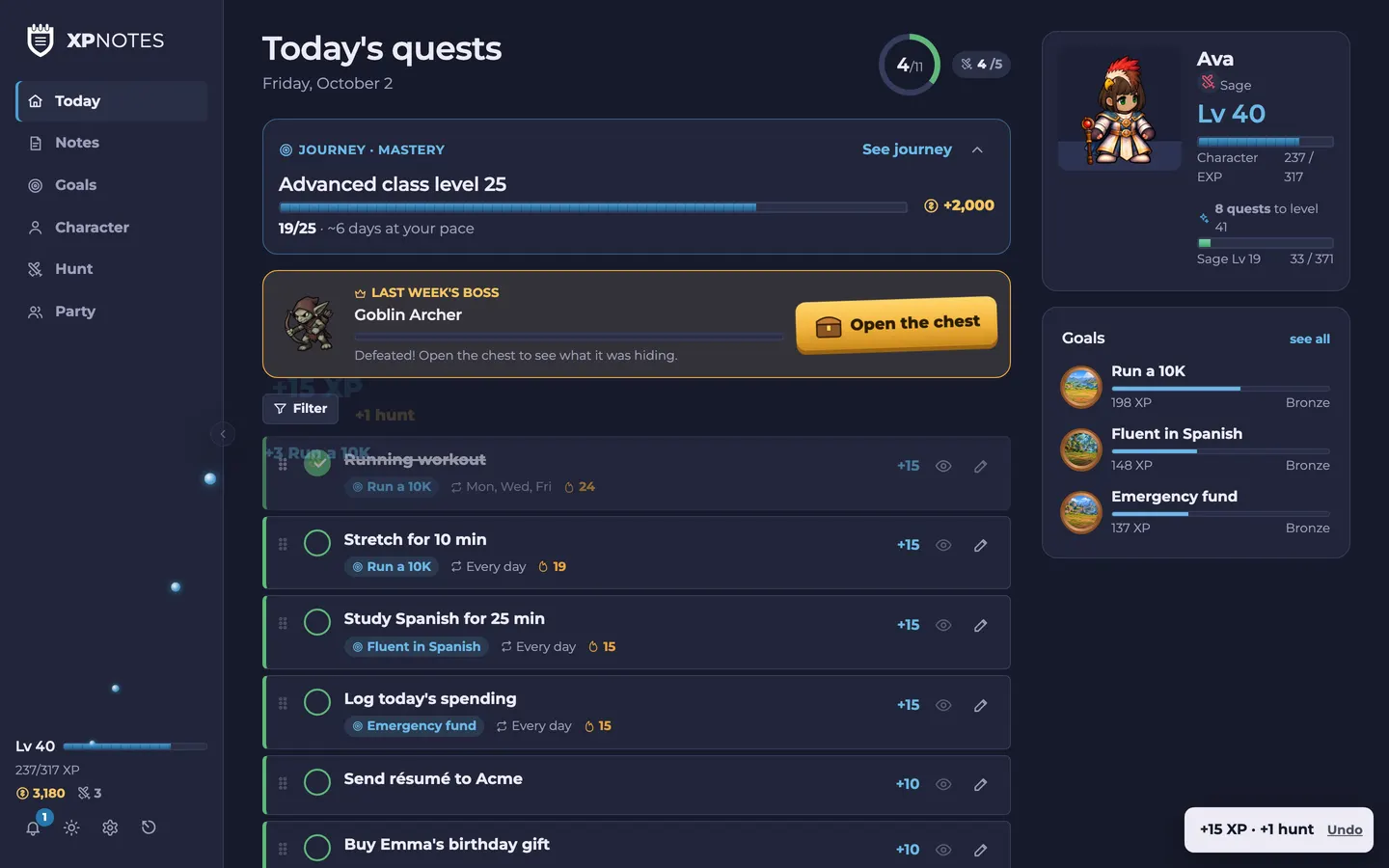
What makes a habit stick is immediate feedback. In XPNotes, checking a quest shows the XP earned at once. On 10% of the day's completions you can land a critical hit that doubles the XP; the roll is fixed by the game and nobody can buy it. On paper, the equivalent is crossing off the task and adding the XP on the spot, not at the end of the week.
5. Set up a weekly boss
A boss is the week's goal dressed as a fight. In XPNotes, the boss's health is 80% of the recurring quests scheduled for the week (with a minimum of 10), and the bar drops as you complete quests. Example: if you scheduled 25 recurring quests, the boss has 20 health. Winning gives gold and materials.
Notice the design: the boss is tuned below 100%, so an imperfect week can still win. That helps avoid the "I missed a day, so I quit" trap.
6. Handle your streak with care
The streak adds 5% bonus per point, up to 150% of the base XP. It only resets if a scheduled day passes without the quest; days with nothing scheduled don't break it. If you design your own system, borrow that idea: never punish a planned day off.
7. Review every week
Once a week, look at what got done, drop quests that never happen and shrink the ones that stall. Gamification is a living system, and a fix that often helps is making quests smaller.
A sample week, with the game's numbers
Say your goal is getting back to learning English. You schedule 5 recurring quests per workday: "10 minutes of vocabulary", "one lesson", "listen to an episode", "review mistakes" and "write 3 sentences". That is 25 quests for the week, so the boss has 20 health.
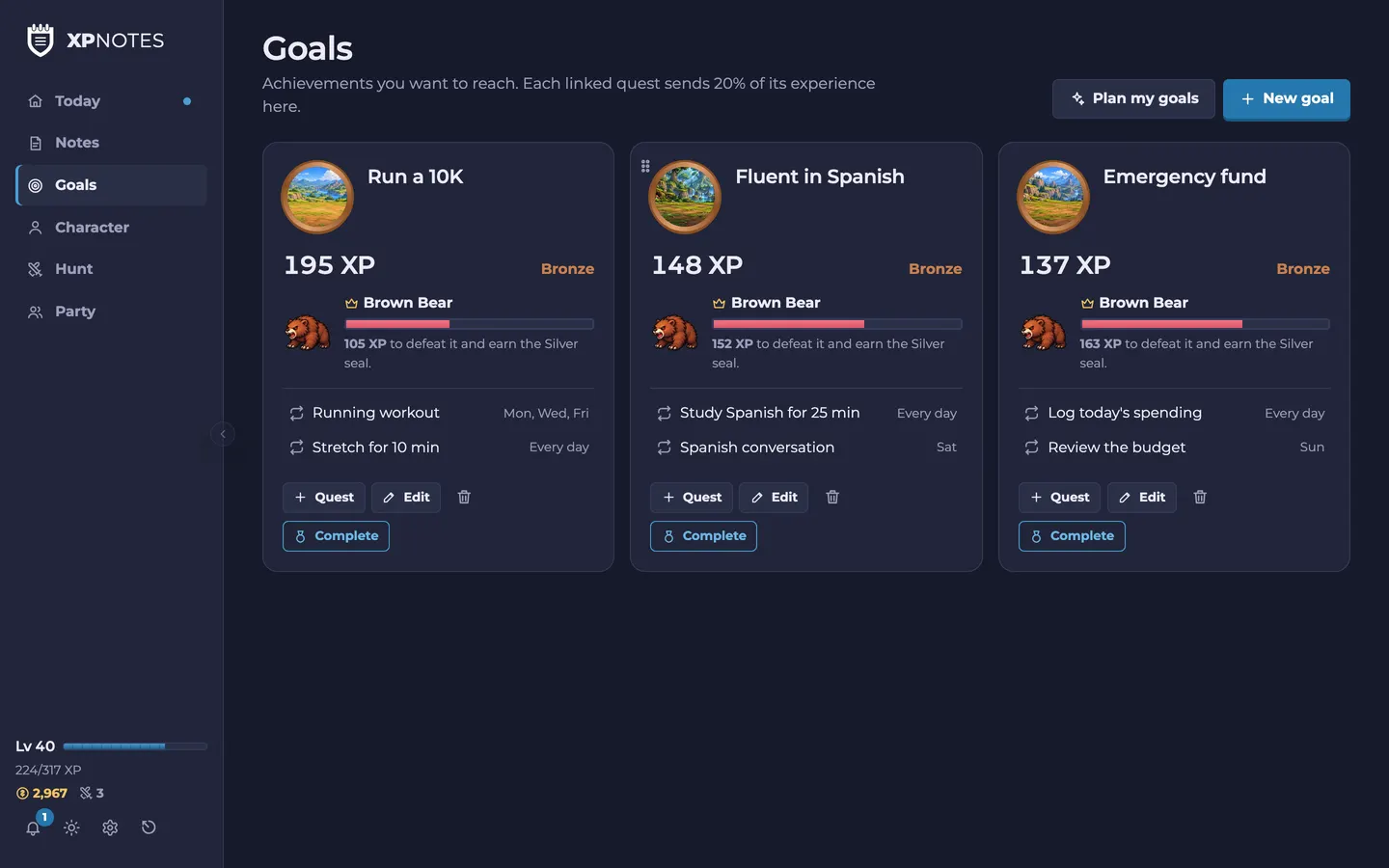
Each quest is worth 10 XP, and a share of it (20%) goes to the linked goal, which earns badges as it accumulates: Bronze at 50 XP, Silver at 300 and Gold at 900. You see the goal moving forward, not just today's task.
Common mistakes when gamifying your life
- Scoring time instead of action. In XPNotes the game only moves when your life moves: XP, hunts and rewards come from completed quests, and nothing rewards hours spent inside the app.
- Vague quests. "Study more" has no finish line. "Do 10 questions" does.
- Too many quests. In XPNotes, completions beyond 15 a day earn reduced XP on purpose, so the game doesn't turn into a checkbox race.
- Rewards that fight your goal. If the prize pulls you away from the goal, the system works against you.
- Quitting after the first slip. One bad day doesn't erase what you built; in the game, XP you earned stays yours.
- Expecting guaranteed results. Gamification can help you keep a rhythm; it doesn't promise an outcome.
A sample day
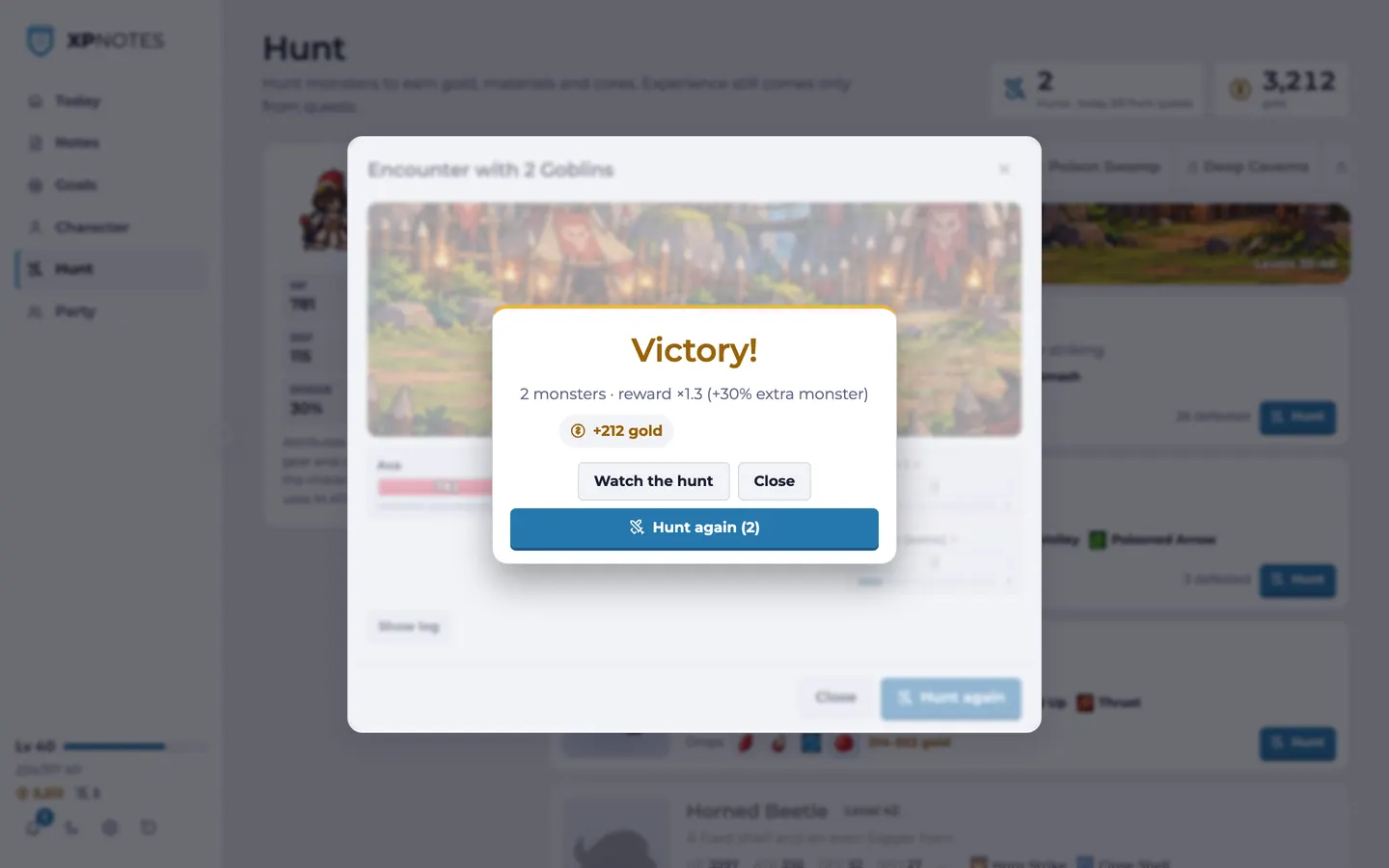
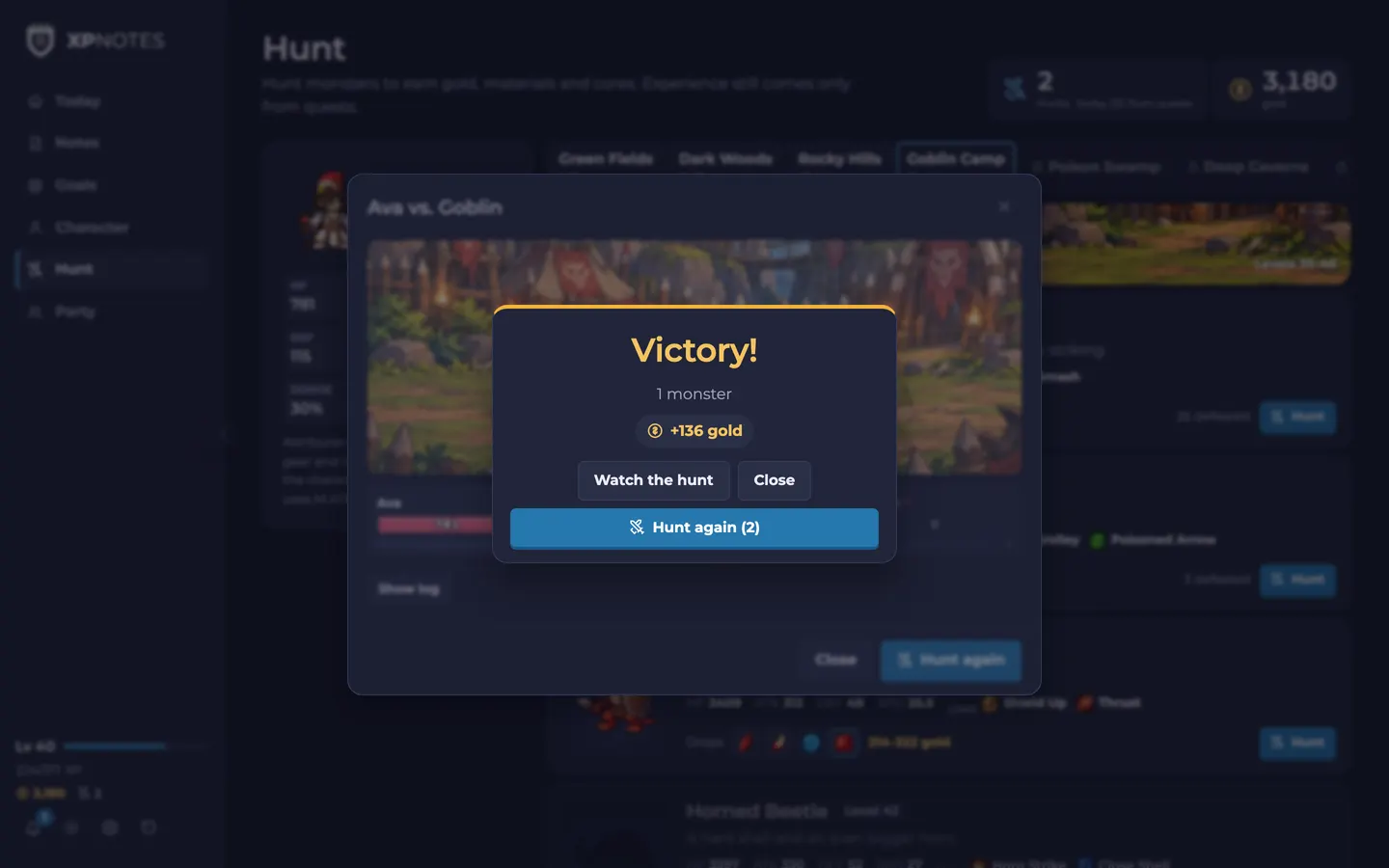
In the morning you open Today and see five quests. You complete the first one and earn a hunt: each of the first 5 quests of the day gives one hunt chance, which is how the game links real life to turn-based combat. At night you spend the hunts fighting for gold and items.
Want to try it? Start free and set up your campaign. For plans, see the pricing page, and for general questions, the FAQ.
Frequently asked questions
What is gamification in one sentence?
It is the use of game design elements, such as points, levels and quests, in non-game contexts. That is the definition Deterding and colleagues proposed in 2011, and it is the most cited in research on the topic.
Does gamifying your life actually work?
A review of empirical studies found that gamification tends to have positive effects, but that they depend heavily on context and on the user. So try it for a few weeks and adjust your quests, without expecting a guaranteed result.
Do I need an app to gamify my routine?
No. You can start on paper: one goal, small quests, a fixed XP value and a level bar. An app like XPNotes only automates the math and gives instant feedback, but the method is the same.
How does the weekly boss work in XPNotes?
The boss's health is 80% of the recurring quests scheduled for the week, with a minimum of 10, and the bar drops as you complete quests. Winning gives gold and materials.
How many quests should I create per day?
A few concrete ones. In XPNotes the first 15 completions of the day earn full XP and later ones earn less, so the game already nudges you toward a realistic load instead of sheer volume.
Sources
- From game design elements to gamefulness: defining gamification (Deterding, Dixon, Khaled, Nacke, 2011)
- Does gamification work? A literature review of empirical studies on gamification (Hamari, Koivisto, Sarsa, 2014)
Turn your goals into quests
Build your campaign in XPNotes and earn XP for what you actually do. The Free plan is complete.
Start free