

Gamer and Productive: How to Play Without Putting Life on Hold

If you play World of Warcraft, Ragnarok Online or The Witcher, you know the dilemma: life needs attention, the game does too, and it feels like only one of them fits in the week. The usual fix is to quit gaming altogether. This guide proposes another: put the game in the right place in your plan, so it works as a reward instead of a guilt trip.
Can you be a gamer and keep your life on track?
You can, and the key isn't playing less as punishment; it's agreeing in advance. When the game is whatever is left of the day, it eats into sleep and tasks. When it's cut off by force, it becomes the forbidden topic that returns with guilt. In between there is a simple deal: life gets its agreed minimum, and the game comes in without the weight.
Making the game stop being a punishment or an escape and become a reward is a change of mental setup, not of character. The rest of this guide shows how to do it in practice.
Step 1: set life's minimum (3 quests, not 30)
Before thinking about hours of play, answer: what can't be missing today? Pick three things at most, small enough for a bad day. Examples:
- one work or study task that moves your main goal;
- one way of looking after your body (a short workout, a decent meal);
- one thing for the home or family.
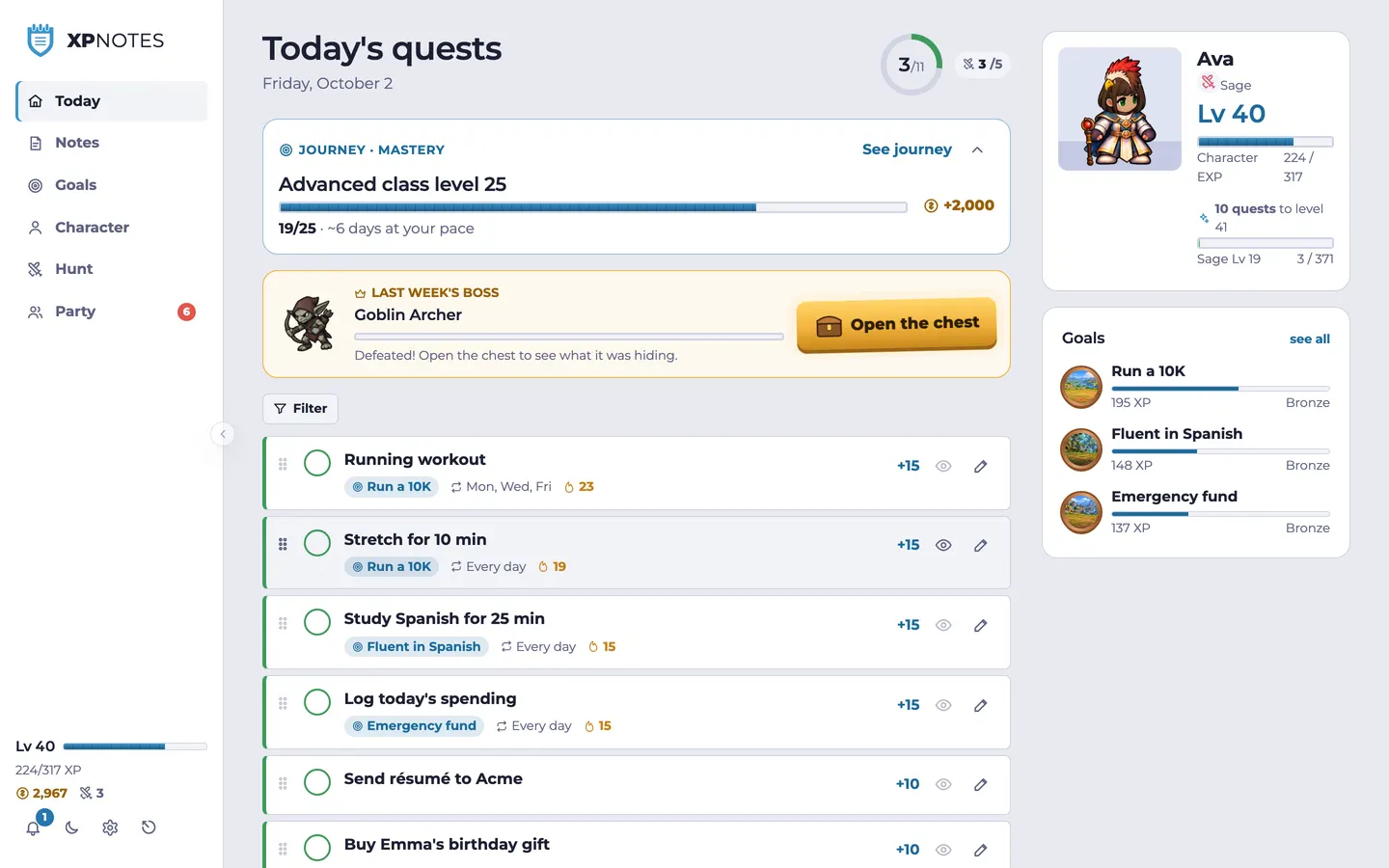
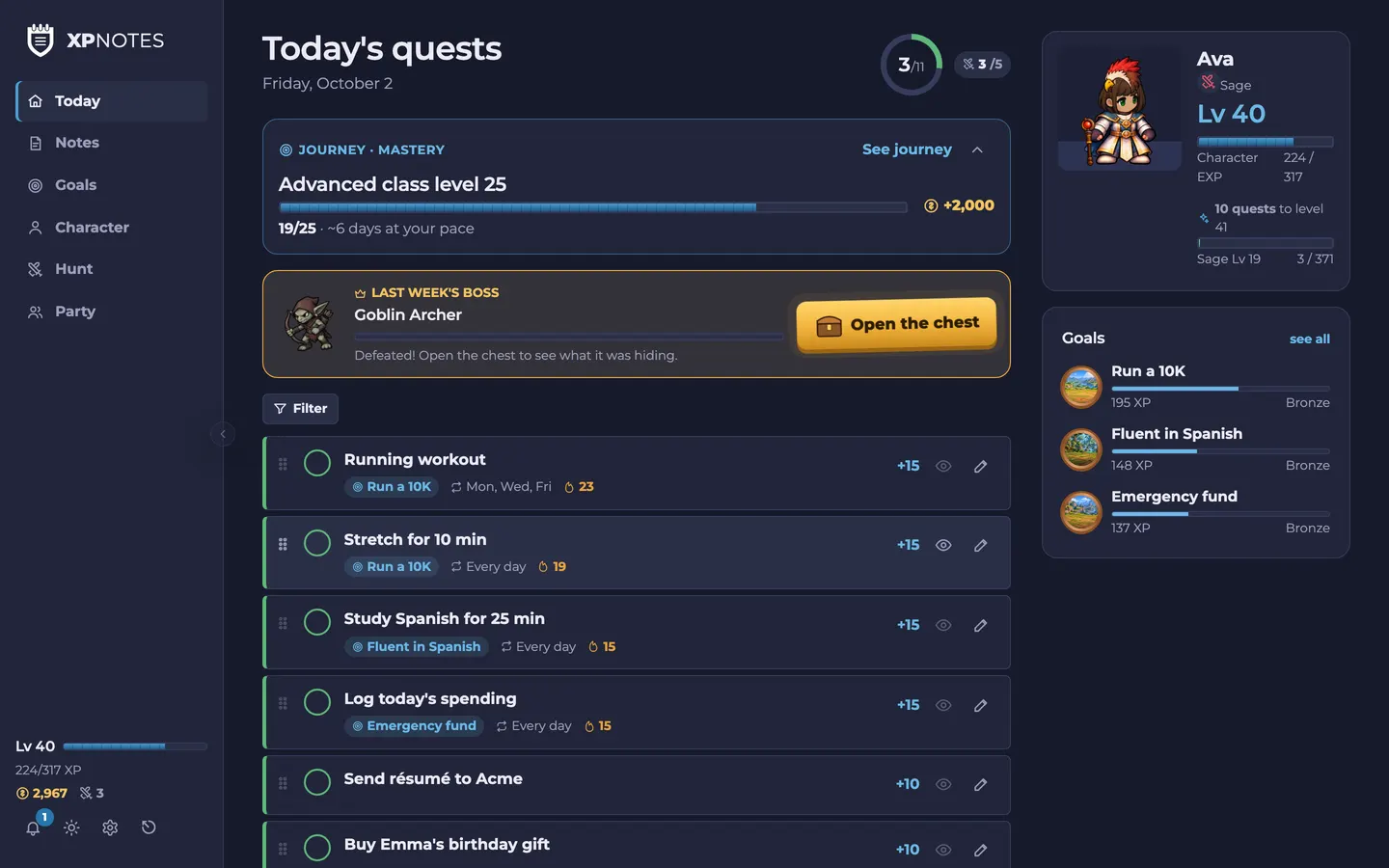
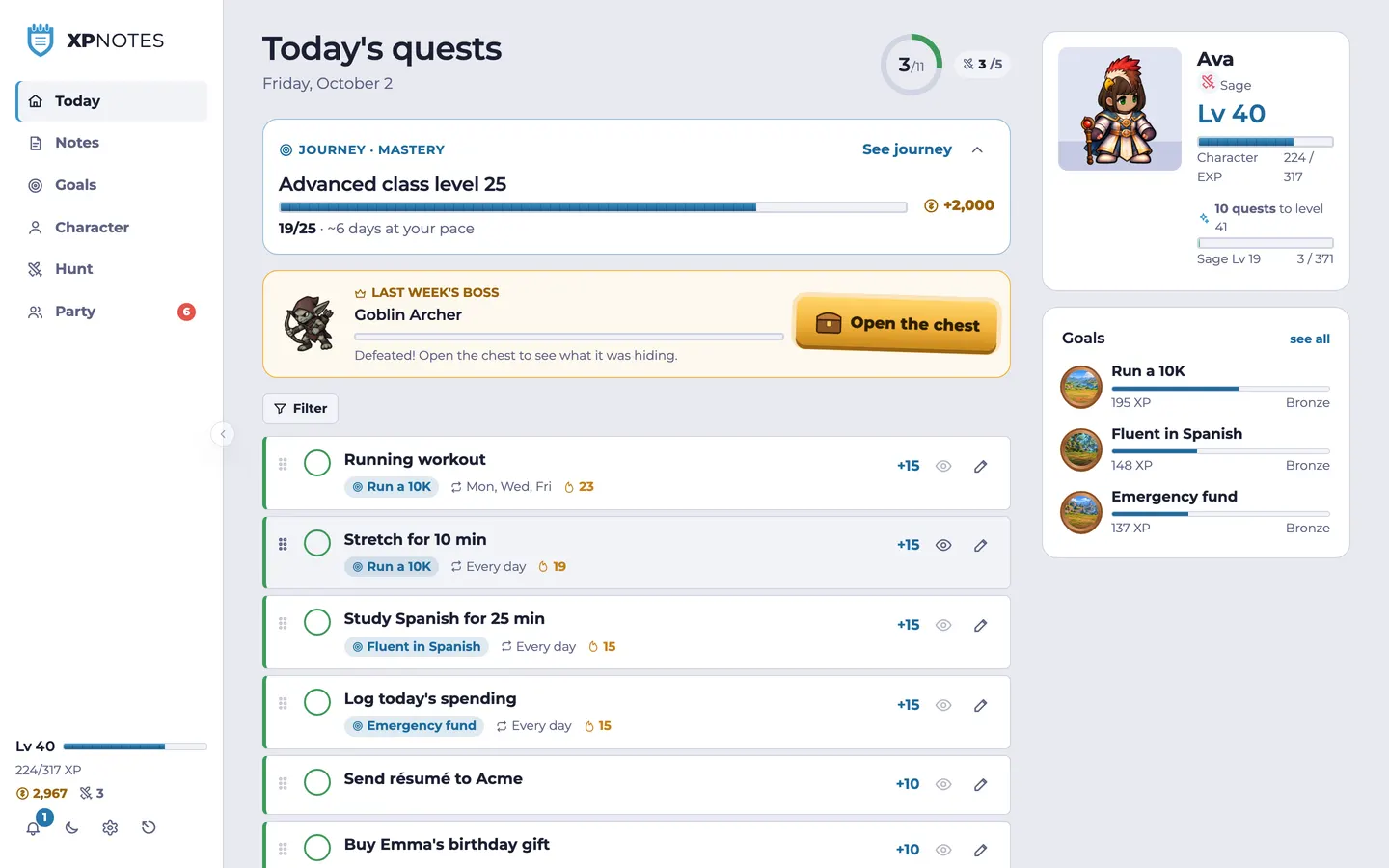
In XPNotes each one becomes a 10 XP quest, and the Today screen shows only what fits in the day.
Step 2: make an "if-then" deal with yourself
The minimum only works if it becomes a trigger. Instead of "I'll play later," decide: "if I finish my three quests, then I play guilt-free until 10 p.m." Plans in this format, called implementation intentions, were analyzed by Gollwitzer and Sheeran across 94 independent tests, and overall they helped people follow through on what they intended.
Two tips:
- Write the deal where you'll see it (a pinned note, the Today screen).
- Set the time to stop together with the time to start. Deciding with a cool head is easier than deciding mid-session.
Step 3: schedule what the game demands
MMORPGs have time-bound events: the guild raid night, the server event day, the group dungeon. They don't have to fight with your life; they just need to go on the week's calendar like any other commitment.
- Look at the calendar on Sunday and mark the long sessions.
- On those days, move your life's minimum to the morning or afternoon.
- Agree with friends and family on a time when you're fully there, not half-absent in both places.
Step 4: use a game that only moves when life moves
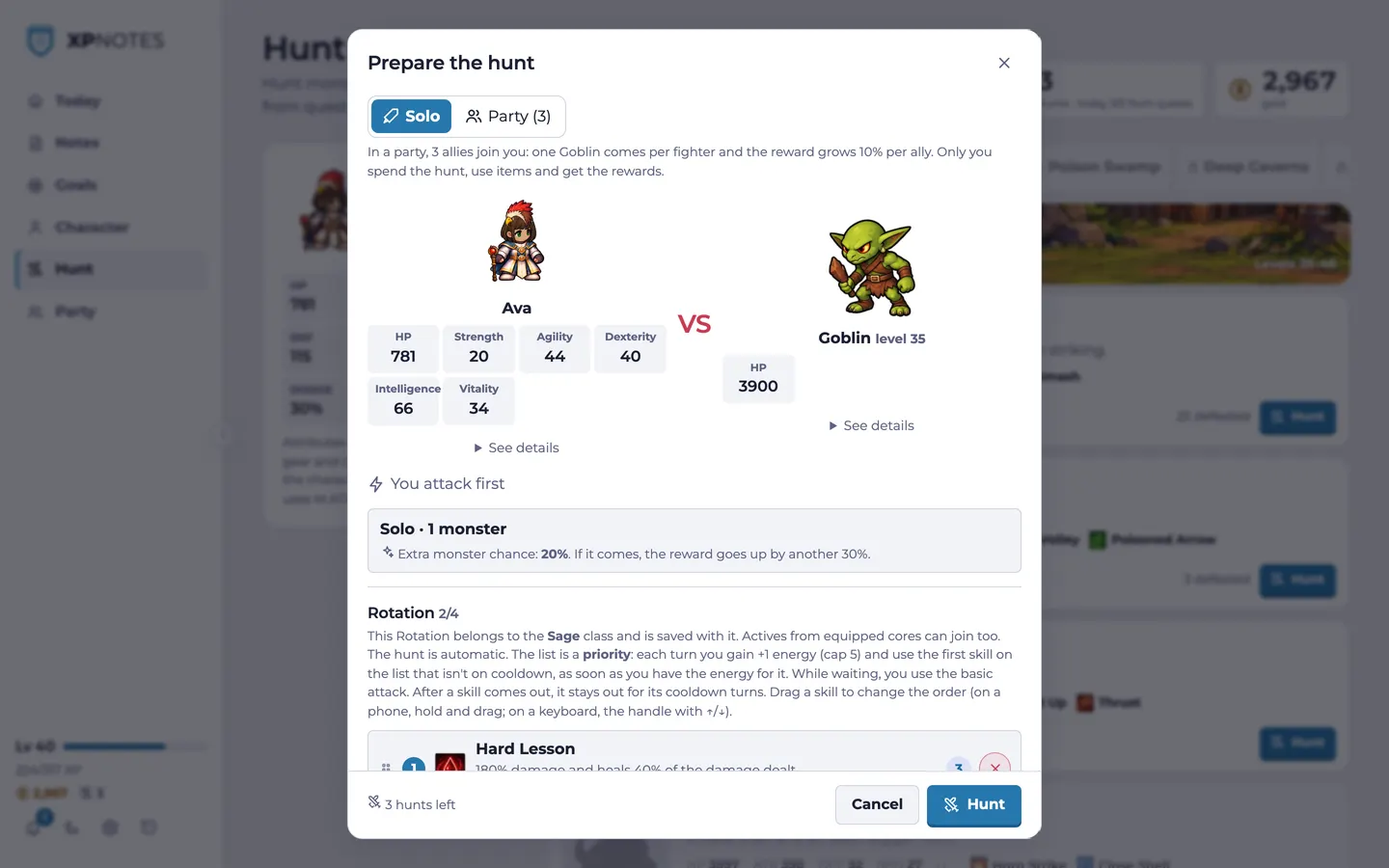
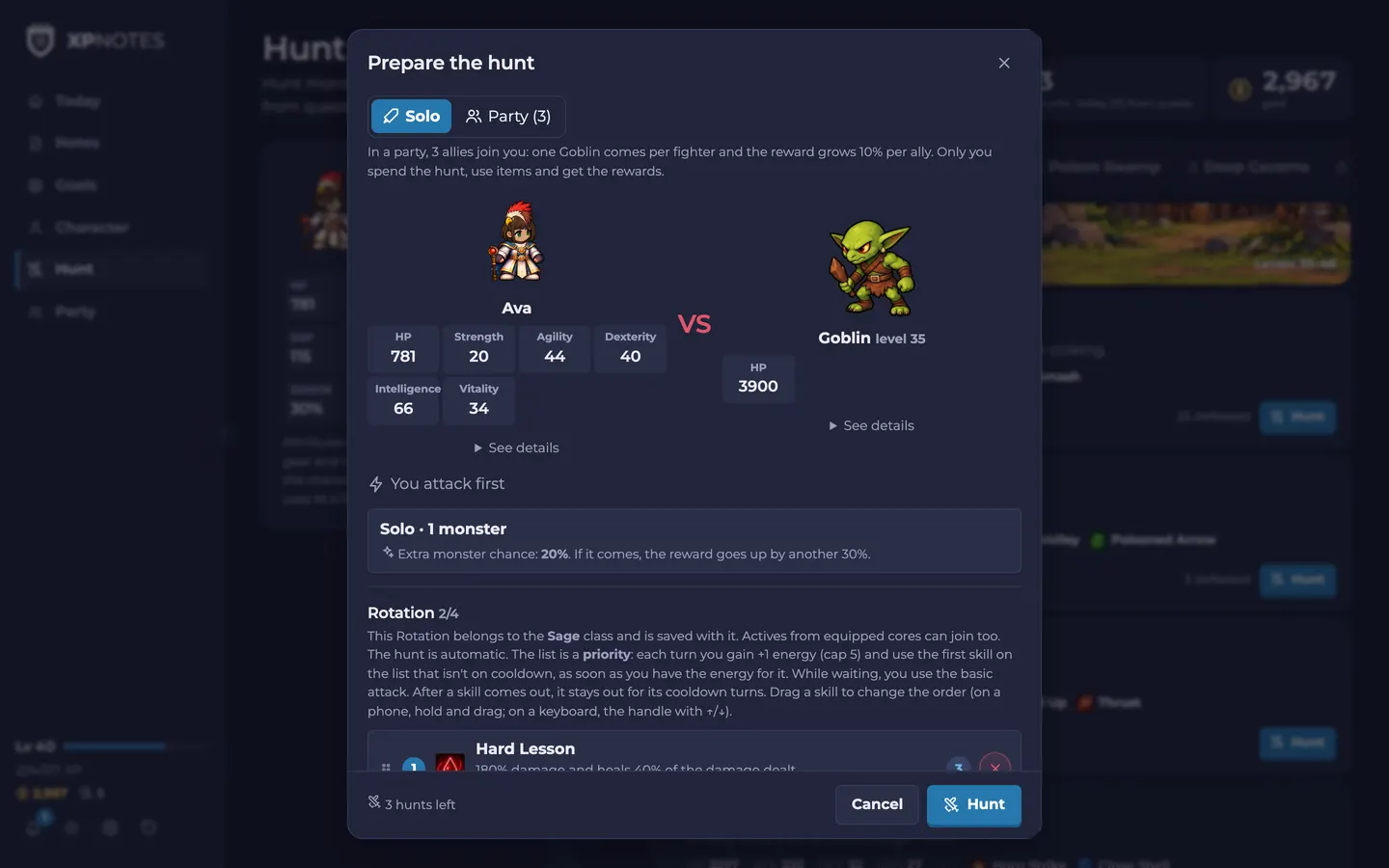
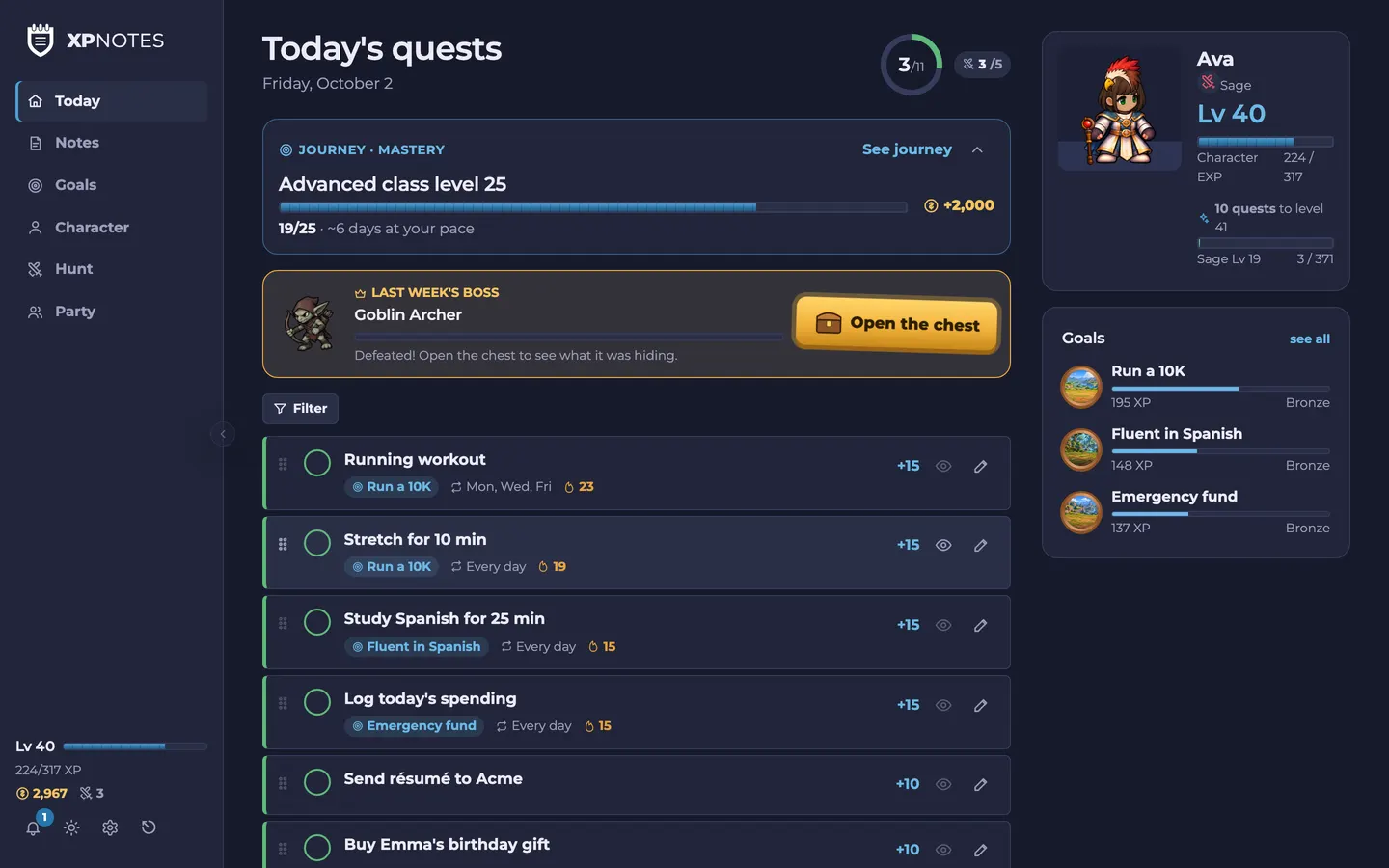
In XPNotes the principle is the same: the game only advances when your life advances. XP, hunts and rewards come from completed quests, and nothing rewards idle time inside the app. Each of your first 5 quests of the day gives one hunt, and the turn-based fight comes afterwards, as the prize.
There is also a deliberate brake against overdoing it: XP returns shrink after many completions on the same day, so doing a thousand tiny things earns no more than your normal plan. RPG players will recognize this as good progression design, tuned for playing a long time without rushing.
Through the week, the boss follows your rhythm too: its health drops with every recurring quest you complete.
Step 5: review without drama
Every week, five minutes:
- Did I hit the minimum on most days? If not, the minimum was too big; shrink it.
- Did the gaming sessions fit without eating into sleep? If not, move the stop time.
- What did I enjoy playing most? Protect that time.
Missed a day? That's not failure. The study by Lally and colleagues (2010), which followed 96 volunteers for 84 days, found that missing a single occasion did not materially affect habit formation, and that the time until the behavior became automatic ranged from 18 to 254 days between people. Pick it up the next day.
And when gaming starts to get in the way for real?
This blog doesn't diagnose anyone. But a simple warning is worth it: if gaming is seriously hurting your sleep, work or relationships and you try to cut back without success, talk to a health professional. Asking for help is a legitimate move, not a defeat.
A sample week
| Day | Life's minimum | Game |
|---|---|---|
| Monday | 3 quests by 7 p.m. | 1h30 |
| Wednesday | 3 quests (done early in the morning) | Raid night with the guild |
| Friday | 3 quests | Free after 9 p.m. |
| Sunday | 5-minute review and the week's calendar | As much as you like, within the deal |
Where to start today
Pick three quests, write the "if-then" deal and mark your next gaming session on the calendar. For a step-by-step on this topic, see how to play an MMORPG without putting life on hold; to build the habit of splitting a goal into tasks, the guide on turning a goal into daily quests; and to understand the system, how XPNotes works and the gamification guide. The page for RPG fans shows the game side of the app.
Want a plan where playing is the prize? Start free.
Frequently asked questions
How do I balance gaming and life without quitting?
Set a daily minimum of up to three small things and leave the game for after it, with an agreed stop time. Schedule long sessions, like raids, on your week’s calendar so they don’t compete with everything else.
Is quitting gaming completely the best answer?
There is no single answer. For many people, cutting everything by force only brings guilt when they return. Making the game the reward for a deal is often more sustainable. You decide what works for your life.
How do I schedule raids and events without falling behind?
Mark long sessions on your calendar on Sunday and move the day’s minimum to the morning or afternoon on those days. That way, when the session starts, the day is already covered.
Does XPNotes encourage spending more time in the app?
No. XP, hunts and rewards come from completed quests, and nothing rewards time spent in the app. XP returns also shrink after many completions on the same day.
When should I look for professional help?
If gaming is seriously hurting your sleep, work or relationships and you try to cut back without success, talk to a health professional. This blog doesn’t diagnose anyone.
Sources
- Implementation intentions and goal achievement: A meta-analysis of effects and processes
- How are habits formed: Modelling habit formation in the real world
Turn your goals into quests
Build your campaign in XPNotes and earn XP for what you actually do. The Free plan is complete.
Start free